
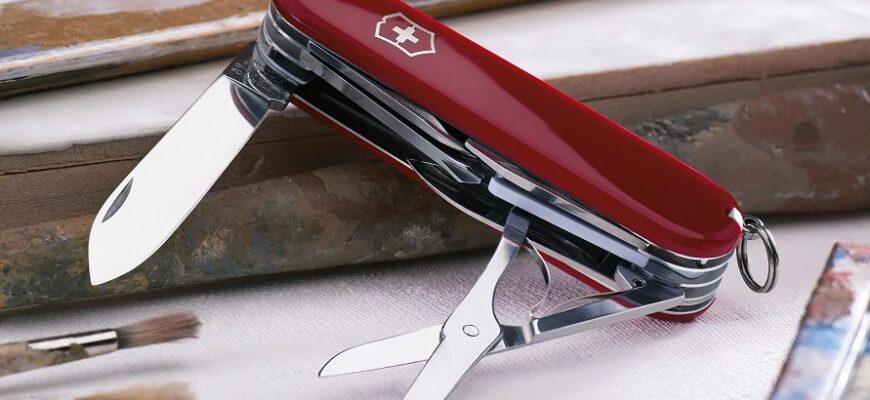
A Swiss Army knife can be a useful tool in everyday life as well as in serious survival situations.
People frequently refer to people who are competent at many different tasks as “Swiss Army knives.” This is due to the fact that these knives often have 33 distinct blades and tools, giving their users access to a wide range of functions.
However, you must take good care of your Swiss Army knife in order to get the most out of it. Let me now demonstrate how to clean a Swiss Army knife.
You may extend the life of your Swiss Army Knife by following the detailed instructions in this manual.

You will probably need the following:
- Warm water
- Mild soap
- Isopropyl alcohol
- Toothpicks
- Brush
- Deep dish or bowl
- Lubricating oil
- Lint-free rags
The problem is that in order to prevent rust, you need to be careful to get into all of its crevices and avoid letting it soak in water for too long.
Moreover, these knives are built to last, so don’t worry.
Therefore, if your father or grandfather owned one, it’s likely that it’s still functional today.

- Swiss Army Knife Maintenance
- Step 1: Take off the knife’s scale equipment and electronics
- Step 2: Half-fill your sink with hot, soapy water
- Step 3: Brush away the dirt
- Step 4: Open the front tools and clean the knife’s interior
- Step 5: Clean the scale slots and back tools
- Step 6: Rinse Swiss Army knife under the water
- Step 7: Dry it properly
- Step 8: Clean any excess oil while oiling your Swiss Army knife
- Step 9: Replace the broken parts
- What mustn’t you do with your Swiss Army knife
- WD-40
- Dishwasher
- Other materials
- How frequently should I do my Swiss Army knife cleaning?
- Liquids to use to clean the knife
- Concluding thoughts
- FAQs:
- Should you oil a Swiss Army Knife?
- Can you wash Swiss Army knife?
- Can you dishwash a Swiss Army knife?
- How to clean Swiss Army knife?
Swiss Army Knife Maintenance
Proper maintenance is crucial to ensure the longevity and optimal performance of a Swiss Army knife. Regular cleaning and upkeep are essential. This step-by-step guide will provide you with the necessary instructions to effectively clean and maintain your Swiss Army knife.
Step 1: Take off the knife’s scale equipment and electronics
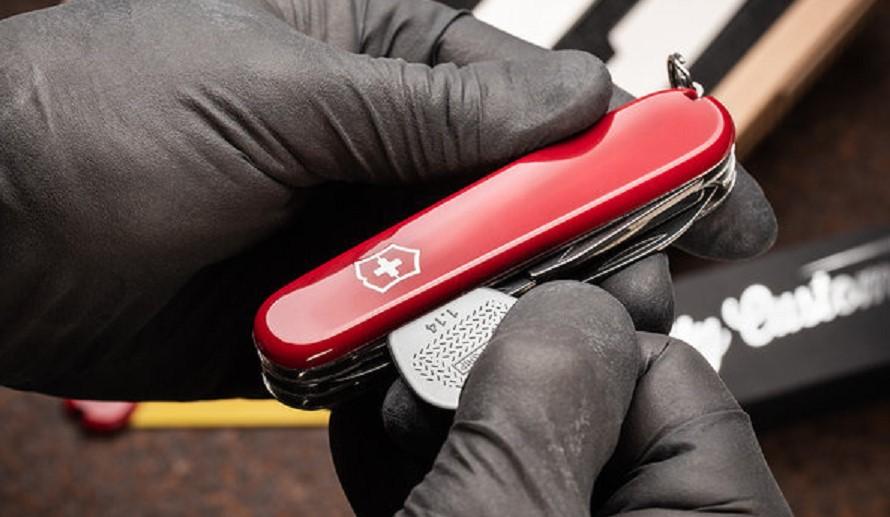
Some Swiss Army knife versions contain electrical parts that are not at all water-resistant; these items could be batteries or USB ports.
It’s preferable for you to take them to a maintenance shop if they ever get wet to make sure everything is still working properly.
If you own one of these types, you must first start the cleaning process by removing the electrical components and storing them safely away from the water.
Step 2: Half-fill your sink with hot, soapy water
Before we do anything, keep in mind that we instructed you to attempt and brush off any debris that might have collected on the knife’s body and blades. So, it’s time to do some serious cleaning!
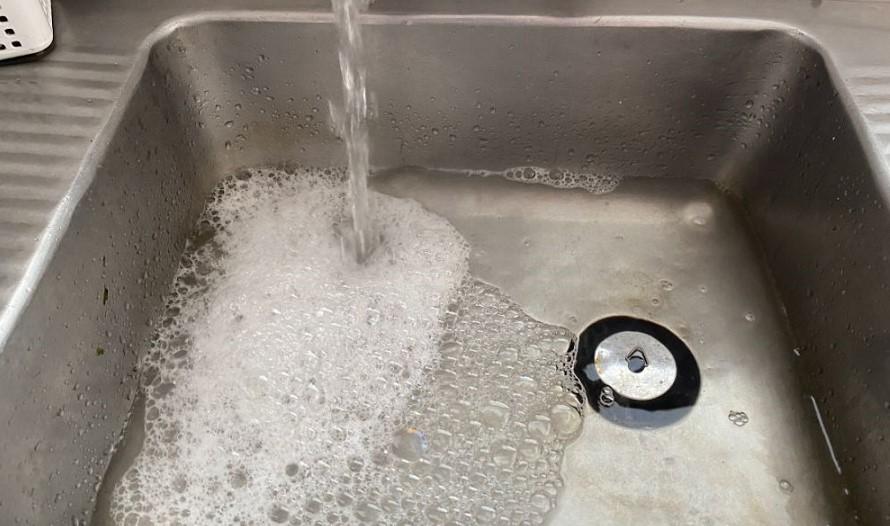
Warm water combined with a small amount of mild dish soap should be poured into your sink or bowl until it is halfway full (or high enough to wet the knife and its parts).
Before dipping your knife in the water and letting it soak for a few minutes, first open the blades, so they are all sitting out.
Step 3: Brush away the dirt
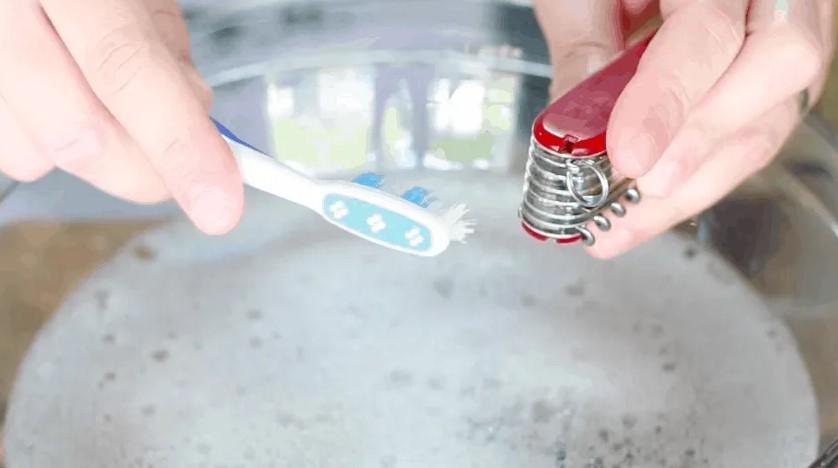
After the two minutes have passed, bring your brush or a knife’s toothpick, and prepare to put in some elbow grease. Start cleaning the knife while making sure that you’re getting the hinges and other connecting points. You can brush underwater for less splashing and better cleaning.
Naturally, exercise caution when working with the blades. Use a wet pipe cleaner to brush away the dirty debris. If there is some left anyway, I hope it will be removed by the warm soapy water. Dish soap will be okay here.
Step 4: Open the front tools and clean the knife’s interior
We’ll now begin concentrating on the front and rear tools, the Swiss Army knife’s two main storage areas.
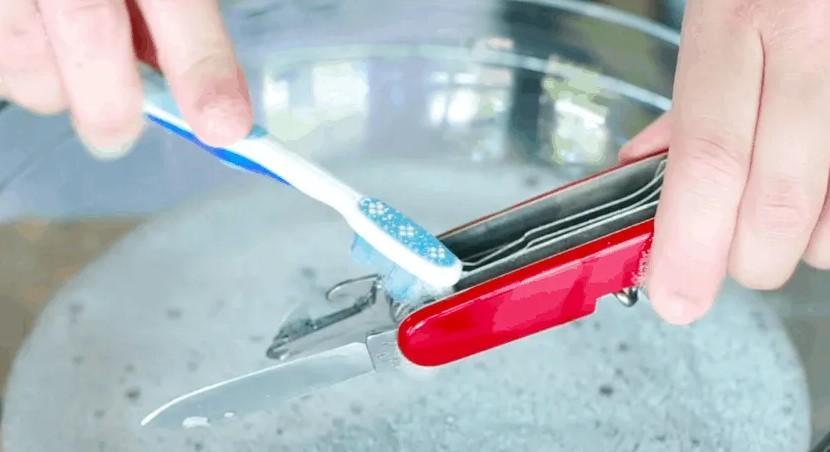
Start by going through the front tools with your brush, cleaning each one both above and below.
You must remove the debris from between the indentations on some of these instruments since they are serrated. Additionally, it’s best to clean every instrument separately.
Step 5: Clean the scale slots and back tools
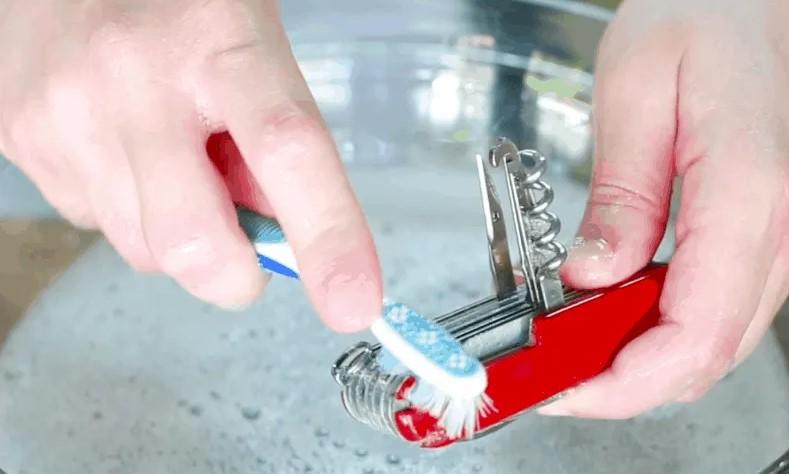
You’ll follow the identical steps for the rear tools. In order to prevent them from leaking on one another, open them entirely but at distinct levels.
Clean the area around the blades and make sure to reach all of the notches and hinges. Additionally, don’t forget to re-dunk the object to get all of the nooks and crannies you missed the first time.
Step 6: Rinse Swiss Army knife under the water
Before we begin rinsing your knife, you can use isopropyl alcohol to remove any persistent crud that soap and water weren’t able to get rid of. Remove all the knife’s scale tools and electronic components. Most Swiss Army knives do have electronic components.
Unless you soak your Swiss Army knife in alcohol for a period of time more than six hours, this won’t harm it.
In order to ensure that your knife is as good as new, it is okay to let it soak for a few minutes or even an hour.
After cleaning the front and rear of your Swiss Army knife, give it one or two more passes with the brush on any areas you feel require a little extra attention.
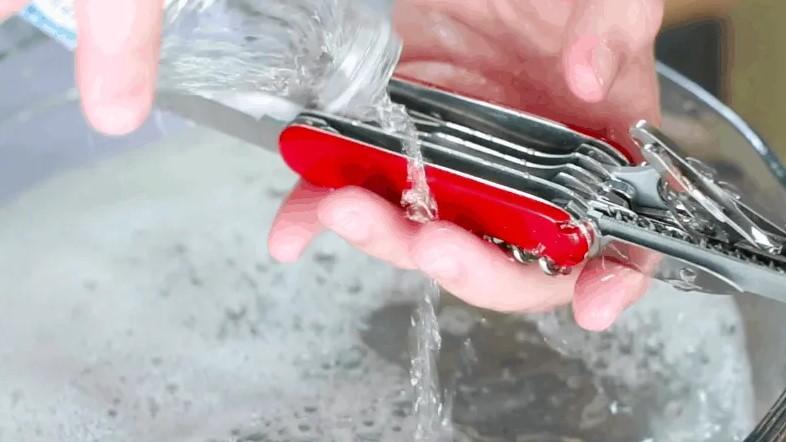
Drain your sink, give your knife a minute or so in warm, soapy water to ensure that all traces of soap are gone, and then give it one more brush for extra cleanliness.
The tools should be opened and closed as many times as you can while submerged. In this manner, water will continuously flow toward the hinges from all directions.
Step 7: Dry it properly
We’re done using water for the day, so shut off the faucet. Shake your knife vigorously to remove as much water as you can. The knife shouldn’t be left to dry on its own because things have a tendency to accumulate water.
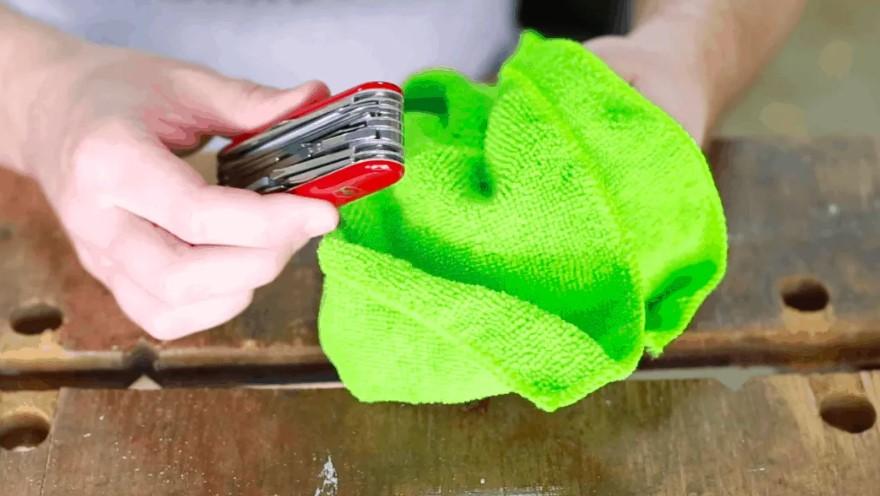
Next, begin physically drying one of your lint-free clothes. The ideal practice is to keep all instruments accessible while exercising extreme caution to avoid cutting yourself.
To collect as much water as you can from the area around the hinges, try to get as close as you can. No matter how much you try to dry anything off, objects still tend to retain moisture; therefore you’ll need to put the knife somewhere sunny.
Step 8: Clean any excess oil while oiling your Swiss Army knife
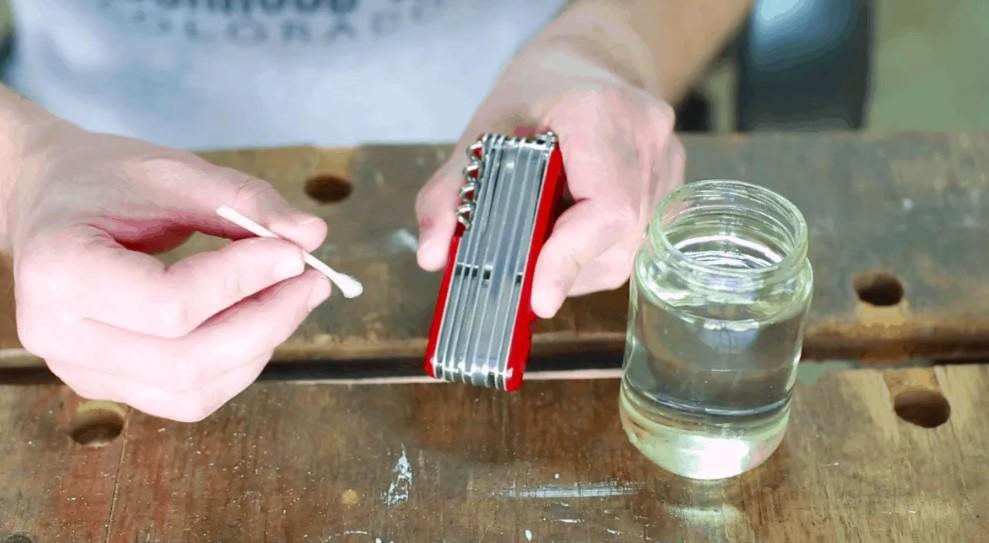
The hinges of a Swiss Army knife are its main feature; they require regular lubrication to be in good operating order. Your knife has to be re-oiled as a result of the thorough cleaning it just underwent.
Fortunately, Victorinox produces its own Swiss Army knife lubricating oil and sells it in bottles with nozzles, which greatly simplifies the procedure of re-oiling the knife.
Apply a few drops of oil with this nozzle at each hinge, being careful not to overdo it. One drop of oil per hinge is all that is required; you don’t want your knife to be covered in oil. Following that, begin shifting the blades around to make sure everything is slick.
Therefore, if you accidentally use too much oil, grab another one of your lint-free cloths and wipe the excess oil from the knife till you can firmly grasp it. Clean all the excess oil when you finish using the same cloth.
Step 9: Replace the broken parts
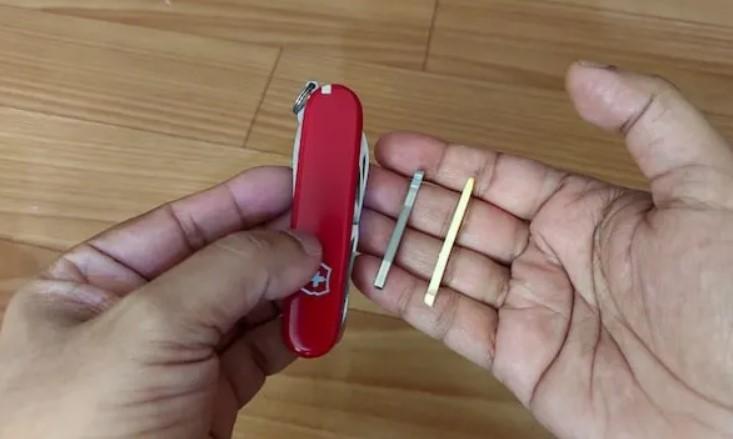
Toothpicks, tweezers, and scissor springs are examples of little accessories that can deplete or vanish over time. A complete line of replacement components is available from the Swiss knife shop to restore your knife to its pre-loss functionality.
Victorinox now offers mini-tools that fit into the corkscrew, lanyards, new colored toothpicks and tweezers, and more if you want to customize or add more usefulness to your knife.
What mustn’t you do with your Swiss Army knife
It’s vital to remember before we start that improper knife maintenance can potentially cause irreparable damage.
When cleaning any knife, you should absolutely stay away from the following:
WD-40
If you’ve never heard of WD-40, it is a solvent or rust dissolver, whose name stands for “water displacing.”
You might be surprised to learn that WD-40 should not be used on Swiss Army knives.
WD-40 is too thick to penetrate adequately because it is designed for heavy-duty chains, auto parts, etc.
Dishwasher
Do not put your Swiss Army knife in the dishwasher AT ALL COSTS!
It’s amazing how frequently people make this error, yet dishwashing detergents can ruin your knife (It is also detrimental to the casing).
Other materials
Bleach. Because bleach is too harsh, it will scrape the knife’s blade and hinges, making it more likely to jam.
You won’t be surprised to learn that sandpaper will also harm your knife.
You might be tempted to use sandpaper to try to remove large dirt particles off your knife. I’ll say it quickly: don’t. Your knife will sustain scratches from the sandpaper that you won’t be able to remove.
Rust remover is intended for larger, much chunkier tools, similar to how WD-40 is. Due to the fact that rust remover will adhere to the knife’s hinges and blades, it will eventually obstruct the mechanism, requiring vigorous brushing to remove.
How frequently should I do my Swiss Army knife cleaning?
It truly depends on how regularly and for what you use your Swiss Army knife. I typically clean mine once or twice a year.
You might clean your Swiss Army knife every week or every month if you use it frequently and in settings where it collects a lot of dirt. You might need to sharpen the knife more frequently if it sees a lot of use.
However, you should clean it at least once a year, even if you use it very little. Even a Swiss Army knife left unused in the drawer will eventually become dirty, and the hinges will need to be opened and closed sometimes to keep the joints and springs in good working order.
Liquids to use to clean the knife
You might need to use a solvent if your pocket knife is still stiff and grimy.
I advise rubbing alcohol, commonly known as isopropyl alcohol. It is inexpensive, efficient, and skin-safe to use.
Additionally, you can soak your knife several times in a bowl of water with a little acetone or ethanol in it. Be aware that rubbing alcohol and other types of liquids mentioned here require safety precautions!
Concluding thoughts
You now know how to properly maintain and clean Swiss Army knife. Professional knife maintenance will depend on how well you take care of your knife. Avoid cleaning Swiss army knives in the dishwasher to prevent damaging your knife.
Make sure you have all the tools ready before you start giving your knife a spa treatment. Enjoy cleaning your knife by following the instructions carefully and step-by-step. Finally, mineral oil will add shine to your knife.
Your Swiss Army knife will last you for many years if you take excellent care of it.
Be careful with the knife blades while cleaning!
FAQs:
Should you oil a Swiss Army Knife?
Yes, one of the steps in the cleaning process of Swiss army knives is to oil them with any type of oil you might have.
Mineral oil, gun oil, and sewing machine oil are among the oils that can be used, though it truly depends on what is available. In essence, any lightweight oil will do the trick.
Can you wash Swiss Army knife?
You definitely should wash the knife with warm water or other liquids available at home. See the abovementioned section about it.
To wash the entire knife, you will need to rinse the water on it to clean the knife blades. Prepare all the tools you will use after rinsing.
Can you dishwash a Swiss Army knife?
No! A Swiss Army knife is not dishwasher safe, unlike other utensils. The plastic scales on the knife are highly likely to be harmed by the high temperatures.
Numerous dishwashing detergents also have strong chemicals that might harm your dishes.
How to clean Swiss Army knife?
To clean a Swiss Army knife, start by removing any visible debris with a soft brush or cloth. Then, rinse the knife with warm water and mild soap, making sure to open all the tools to clean the crevices. Dry the knife thoroughly before applying a small amount of lubricant to prevent rust.