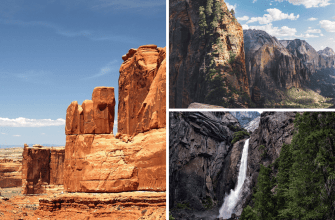
Explore the breathtaking wonders of nature as we delve into the captivating landscapes of Bryce Canyon vs. Grand Canyon, comparing their geological marvels, diverse ecosystems, and cultural significance.
Bryce Canyon National Park was established in 1928 to protect the unique geological structures and ecosystems of the area.
The park works to safeguard local animals, including the endangered Utah prairie dog, and controls vegetation to keep the environment in balance.
Grand Canyon National Park, founded in 1919, aims to protect the Grand Canyon’s geological wonders and cultural history.
The Grand Canyon actively maintains conservation initiatives to safeguard endangered species like the California condor, as well as research to protect the park’s natural resources.
- 1. Best Time to Visit: Weather & Seasonality Differences
- 🌤️ Spring & Fall (May, September – October) — The Golden Window
- ☀️ Summer (June – August) — High Altitude vs. Desert Heat
- ❄️ Winter (November – March) — Snow-Capped Wonders & Solitude
- 2. Unique geological features
- 🔍 Comparison: Intimate Detail vs. Monumental Vistas
- 3. Location: Bryce Canyon vs Grand Canyon
- Comparison
- 4. Size and Scale: How Big Are They?
- 🏜️ Bryce Canyon — Intimate & Sculptural
- 🏞️ Grand Canyon — Monumental & Endless
- 5. Flora
- Comparison
- 6. Fauna
- Comparison
- 7. Transportation and accessibility
- Comparison
- 8.Hiking Trails & Difficulty Levels
- Comparison
- 9. Points of interest: Bryce Canyon vs. Grand Canyon
- Comparison
- 10. Night sky viewing and astronomy programs
- Comparison
- 11. Cultural and historical significance
- Comparison
- Conclusion
- FAQ
- Is Bryce Canyon or Grand Canyon better?
- How far apart are Bryce Canyon and the Grand Canyon?
- Which is better to visit Zion or Bryce Canyon?
- What is the difference between Bryce Canyon and a real canyon?
1. Best Time to Visit: Weather & Seasonality Differences
Timing your trip between Bryce Canyon and the Grand Canyon comes down to one major factor: elevation.
Even though these two national parks are only a few hours apart, their drastically different altitudes create completely different climates.
🌤️ Spring & Fall (May, September – October) — The Golden Window
- Bryce Canyon: Cool, crisp air with comfortable daytime hiking.
- Grand Canyon: Perfect conditions along the rim and inside the canyon.
- Pro Tip: This is hands-down the best time to combine both parks into one trip with smaller crowds and full road access, including the Grand Canyon’s scenic North Rim.
☀️ Summer (June – August) — High Altitude vs. Desert Heat
- Bryce Canyon (8,000–9,000 ft): A refreshing sanctuary with pleasant 75°F–80°F (24°C–27°C) weather. Expect brief afternoon thunderstorms.
- Grand Canyon: While The rim stays around 85°F (29°C), temperatures at the canyon floor routinely spike 105°F (40°C), turning daytime hikes into the inner canyon dangerously hot.
- Pro Tip: Use Bryce Canyon as your midday retreat, and limit Grand Canyon inner-hikes to early mornings.
❄️ Winter (November – March) — Snow-Capped Wonders & Solitude
- Bryce Canyon: Fresh white snow contrasting against bright orange hoodoos. Microspikes or snowshoes are recommended for trail hiking.
- Grand Canyon: The South Rim remains open with light snowfall and quiet trails. The North Rim completely closes to vehicles.
- Pro Tip: Unbeatable for photographers and travelers looking to avoid crowds.
2. Unique geological features
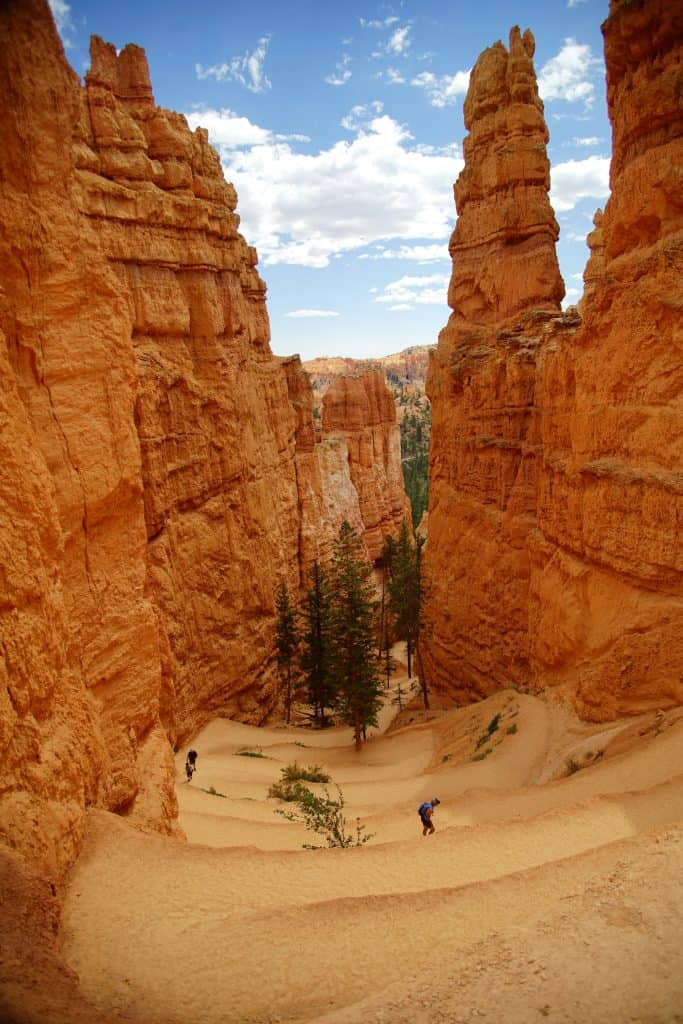
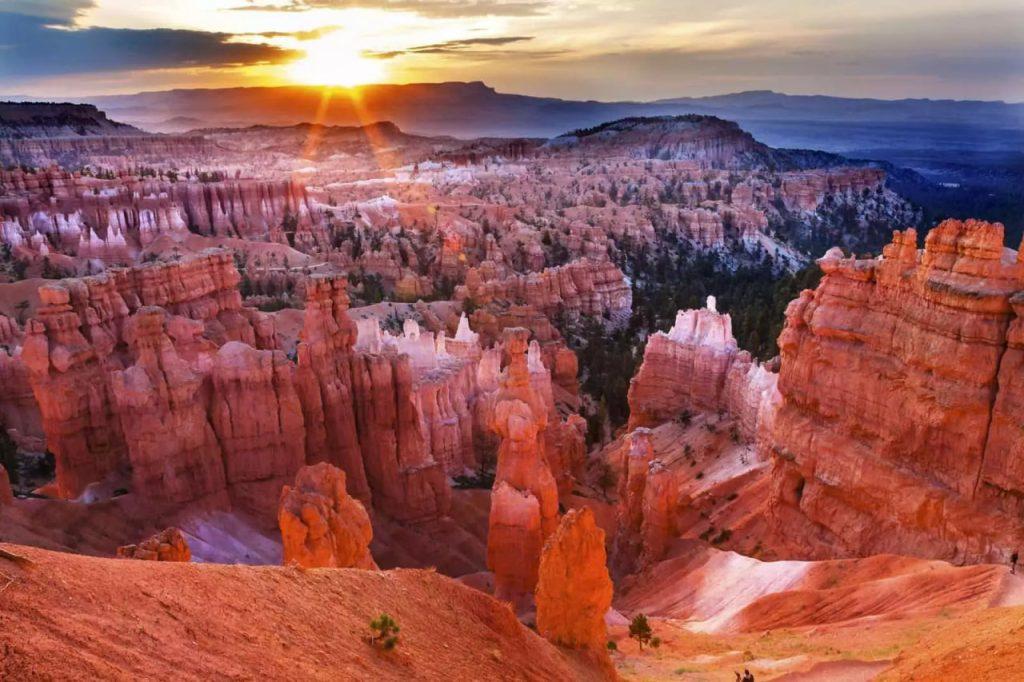
Bryce Canyon is famous for its unique hoodoos and tall and slender rock spires that create a bizarre and intriguing landscape.
The park showcases the complex beauty of erosion through a succession of natural amphitheaters carved into the eastern slope of the Paunsaugunt Plateau.
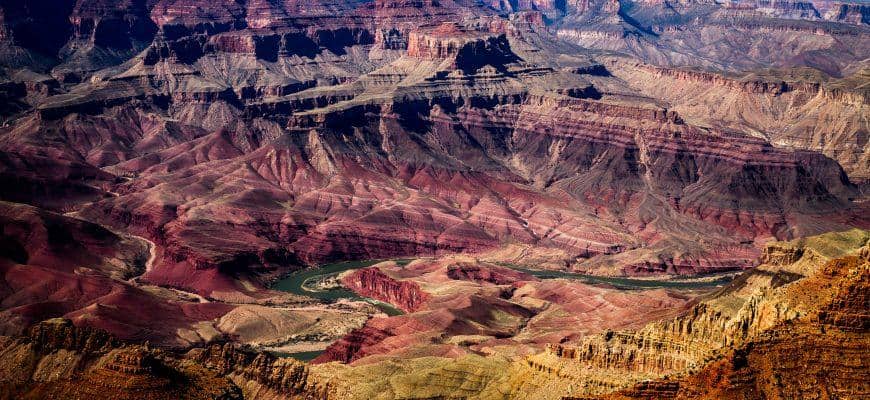
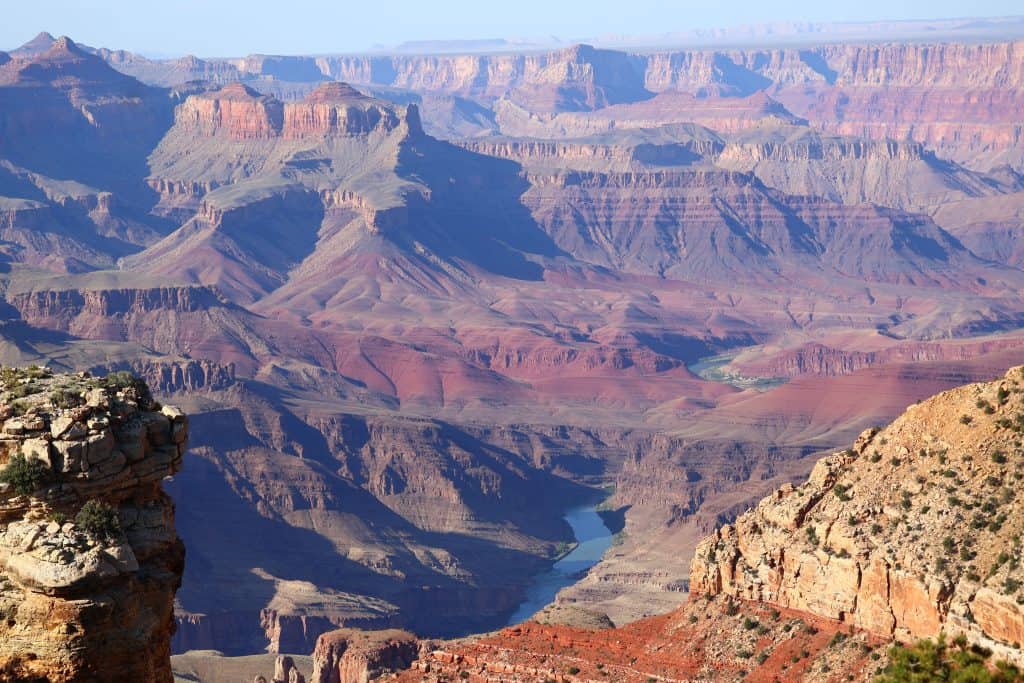
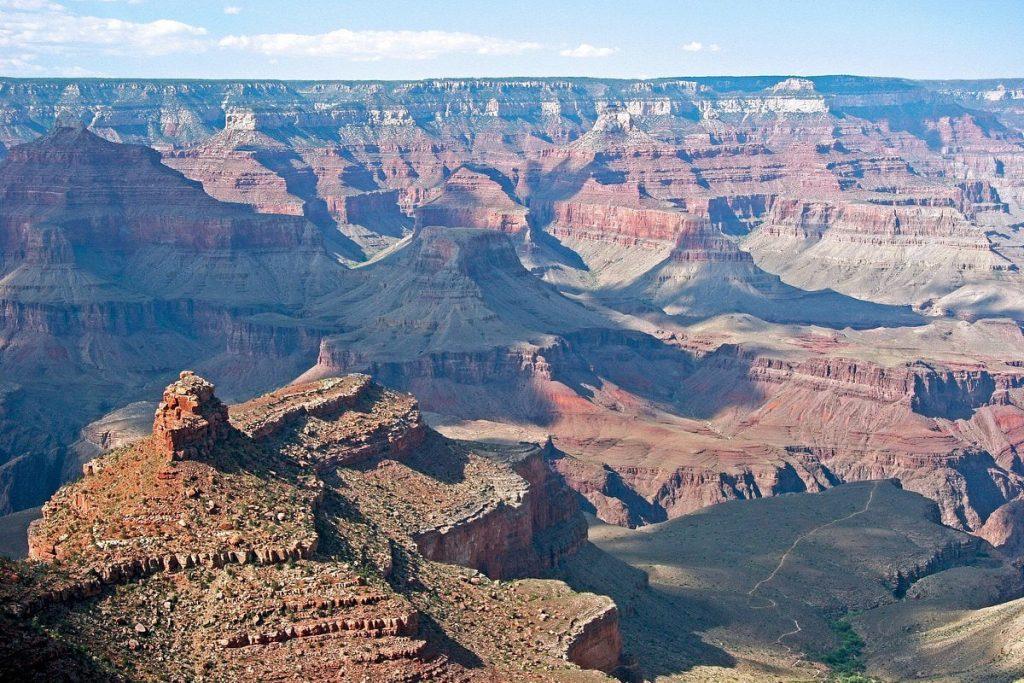
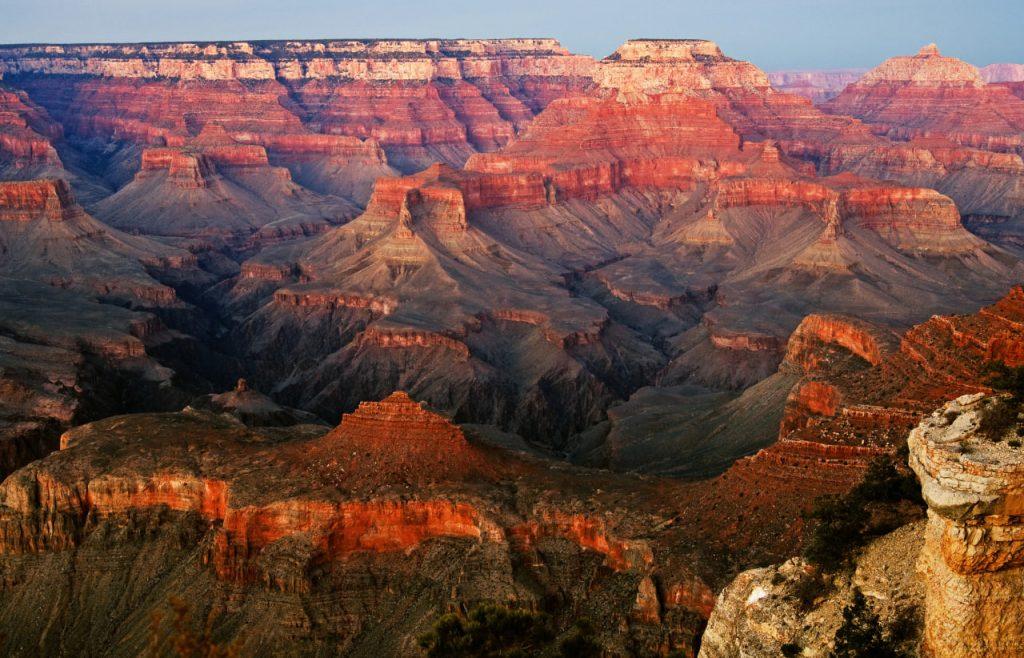
The Grand Canyon reveals millions of years of geological history through its diverse sedimentary formations, exposing a huge array of rock layers.
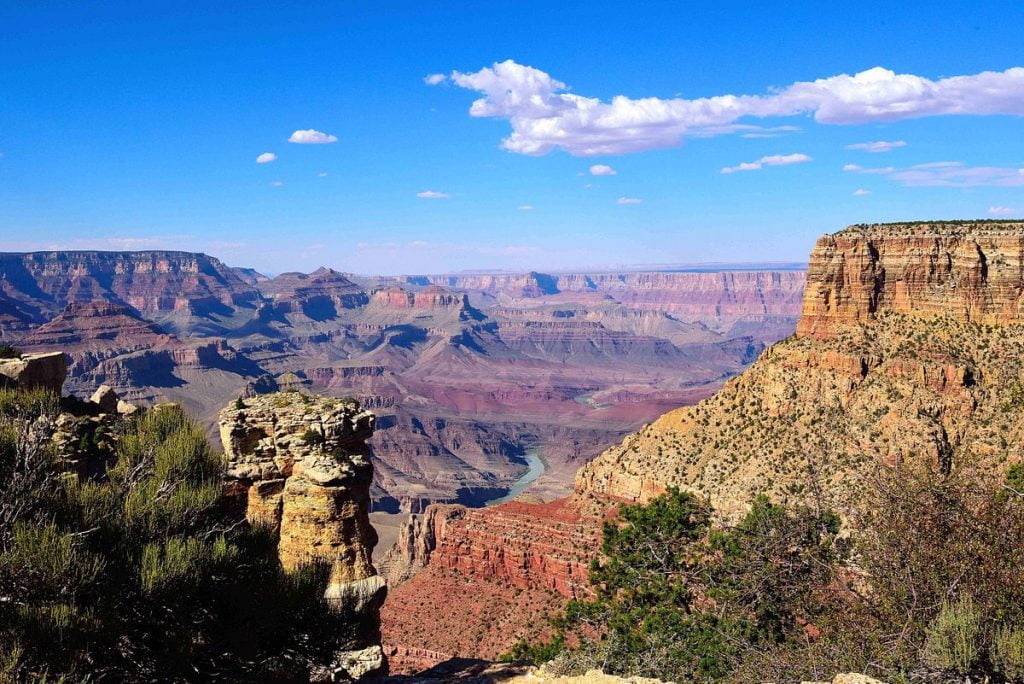
The North and South Rims of the Grand Canyon are principally sculpted by the Colorado River, which has dug through the rock layers for millions of years, creating the famous sheer cliffs.
🔍 Comparison: Intimate Detail vs. Monumental Vistas
- 🎪 Bryce Canyon (Compact & Intimate): Wonders are concentrated within smaller, natural amphitheaters. You walk among the rock spires, creating an up-close, highly personal connection with the landscape.
- 🌌 Grand Canyon (Monumental & Endless): Sprawls across a colossal horizon, exposing millions of years of geological history across an overwhelming, world-scale canyon system.
3. Location: Bryce Canyon vs Grand Canyon
Bryce Canyon
Located in southwestern Utah, USA.
Proximity to other national parks like Zion National Park and Capitol Reef National Park.
Grand Canyon
Situated in northern Arizona, USA, the Colorado Plateau.
Nearby parks include the Grand Canyon-Parashant National Monument and Havasu Falls.
Comparison
States: Bryce Canyon is located in Utah, while the Grand Canyon is located in Arizona, and both exhibit different geological and environmental circumstances.
Proximity to other parks: Both Bryce Canyon and Grand Canyon National Parks are part of a broader network that allows tourists to enjoy many natural wonders in the same area.
4. Size and Scale: How Big Are They?
🏜️ Bryce Canyon — Intimate & Sculptural
- 📐 Total Area: 56 square miles
- 📉 Maximum Depth:1,800 feet (550 meters)
- 🥾 The Scale: A compact, easily navigable series of natural amphitheaters where you walk right alongside the rock formations.
🏞️ Grand Canyon — Monumental & Endless
- 📐 Total Area:1,900 square miles(34x larger than Bryce!)
- 📉 Maximum Depth:6,093 feet (1,857 meters) — Over 1 mile deep!
- 🥾 The Scale: An infinite horizontal horizon exposing eons of geological history that takes days to truly explore.
💡 The Verdict (Comparison): If you want a quick, detailed hike right among the rocks, Bryce is your park. If you want a vast, awe-inspiring canyon that stretches as far as the eye can see, nothing beats the Grand Canyon.
5. Flora
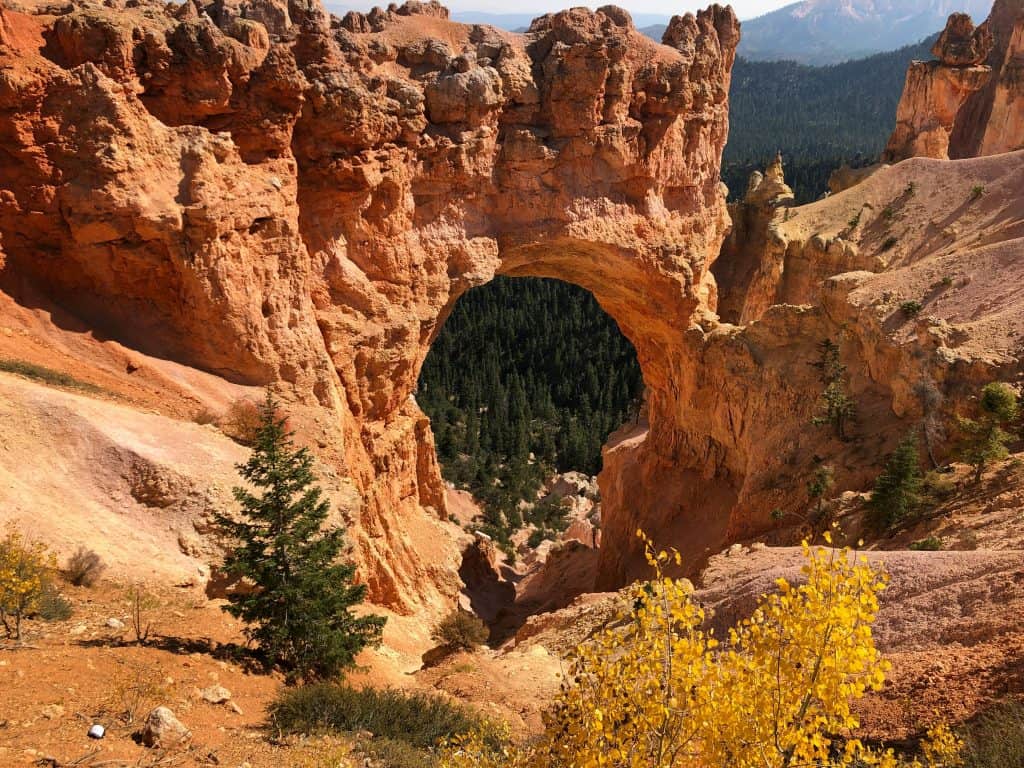
Bryce Canyon is known for its dense groves of ponderosa pine trees.
The National Park is home to some of the world’s oldest living trees, the bristlecone pines. During the flowering season, several wildflowers, such as Indian paintbrush and columbine, add brilliant hues.
Grand Canyon
The canyon’s vegetation zones range from desert plants at lower elevations to coniferous forests at higher elevations.
Juniper and pinyon pine trees are widespread in the canyon’s dry parts.
Lower elevations are home to a variety of cactus species, including prickly pear and barrel cacti.
Comparison
Ecosystem diversity: both national parks have a variety of ecosystems.
Bryce Canyon is known for its lush woods, while Grand Canyon National Park is known for its shift from desert plants to coniferous trees.
6. Fauna
Bryce Canyon
Mule deer: commonly spotted in the park, especially in the early morning or late afternoon.
Red fox: these elusive creatures inhabit the forested areas of the national park.
Golden-mantled ground squirrel: frequently seen near trails and viewpoints, adding to the park’s wildlife diversity.
Grand Canyon
California condor: the Grand Canyon National Park is home to the critically endangered California condor, one of the world’s rarest bird species.
Bighorn sheep: often spotted on canyon rims, showcasing their impressive climbing abilities.
Kaibab squirrel: a unique species found in the ponderosa pine forests on the North Rim.
Comparison
Iconic species: while both national parks include a variety of wildlife, the inclusion of the California condor and big horn shebighorne Grand Canyon contributes to its iconic reputation.
Habitat variations: the canyon’s various environments support a diverse biodiversity.
The forested portions contrast with the Grand Canyon’s combination of desert and forest ecosystems on the South and North Rim.
7. Transportation and accessibility
Bryce Canyon
Bryce Canyon Airport and Cedar City Regional Airport serve Bryce Canyon National Park.
You can also fly to the canyon from Las Vegas Airport or Salt Lake City International Airport.
Visitors can take shuttles from surrounding communities such as Panguitch or drive to the park.
Panguitch (20 miles): offers shuttle services and road access.
Cedar City (80 miles): provides a broader range of transportation options, including rental cars and shuttles.
Grand Canyon
Flagstaff Pulliam Airport and Grand Canyon National Park Airport serve the Grand Canyon South Rim, while Grand Canyon West Airport caters to the West Rim.
Shuttle services operate within the park, and private vehicles are allowed to one of the most visited national parks.
The Grand Canyon Railway offers a historic train ride from Williams, Arizona, to the South Rim.
Flagstaff, AZ (80 miles): closest major city to the South Rim, providing airport services and shuttle connections.
Williams, AZ (60 miles): gateway to the Grand Canyon with railway services.
Comparison
Shuttle services: both parks provide shuttle services for within-park mobility, alleviating traffic congestion and offering easy access to significant sites of interest.
Railway access: the Grand Canyon has a historic railway option that provides magnificent travel to the Grand Canyon North Rim and South Rim, providing an alternative transportation experience not offered at Bryce Canyon.
8. Hiking Trails & Difficulty Levels
Bryce Canyon
Navajo Loop Trail: descends into the canyon, passing iconic hoodoos like Thor’s Hammer.
Queens Garden Trail: showcases a variety of hoodoos and offers panoramic views of the amphitheaters.
Fairyland Loop Trail: a longer trail providing a more remote and less crowded hiking experience.
Grand Canyon
Bright Angel Trail: descends to the canyon floor, offering stunning views of the Colorado River.
Mossy Cave Trail: known for its family-friendly hikes, with panoramic views of the canyon.
North Kaibab Trail: takes hikers to the North Rim, passing through diverse landscapes and offering glimpses of Roaring Springs.
Comparison
Trail difficulty: Bryce Canyon’s hiking trails are often shorter and less arduous, making them more accessible to a wider spectrum of visitors, although it’s a less visited park.
On the other hand, the Grand Canyon offers a combination of easy and more difficult paths.
Scenic views: both canyons have beautiful scenery, however, the trails in Bryce Canyon are frequently focused on up-close views of hoodoos, whilst the trails in Grand Canyon National Park give panoramic vistas of the canyon’s depth and width.
9. Points of interest: Bryce Canyon vs. Grand Canyon
Bryce Canyon
Bryce Point: a popular overlook providing stunning panoramic views of the Bryce Amphitheater.
Sunset Campground: renowned for its breathtaking views, especially during the sunset, casting vibrant colors on the hoodoos.
Inspiration Point: offers a vantage point to admire the hoodoos and the distant cliffs of the Aquarius Plateau.
Grand Canyon
Hopi Point: known for its expansive views of the inner gorge and the Colorado River.
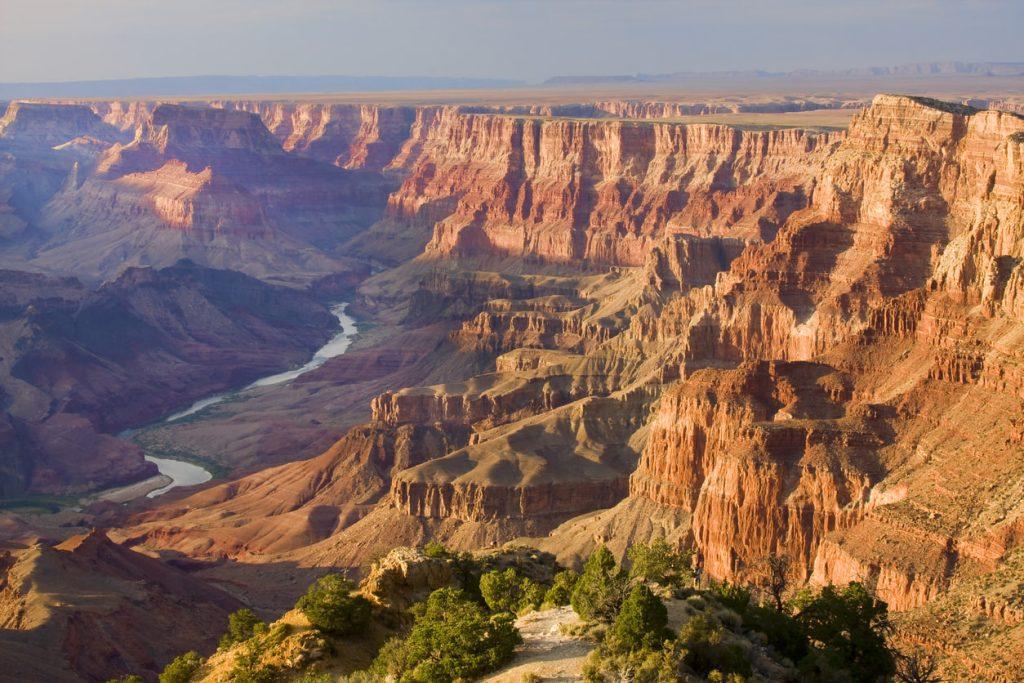
Yavapai Point: features a geology museum providing insight into the canyon’s formation.
Lipan Point: offers panoramic views of the eastern end of the Grand Canyon, showcasing the vastness of the landscape.
Desert View Campground: located near the South Rim of the Grand Canyon, offering basic amenities for tent and RV camping with scenic views.
Comparison
Vantage points: both canyons offer several vantage points, although Bryce Canyon’s vistas frequently focus on the fine details of hoodoos, whilst the Grand Canyon’s overlooks offer larger perspectives of the canyon’s enormous size.
Sunset/sunrise viewing: sunset and dawn viewing opportunities abound in both canyons, with specific sites like Sunset Point in Bryce Canyon and Hopi Point in the Grand Canyon being particularly popular.
10. Night sky viewing and astronomy programs
Bryce Canyon, designated as an International Dark Sky Park, provides superb stargazing conditions with low light pollution. National Park offers ranger-led astronomy events such as telescope viewings and instructional sessions.
The Grand Canyon is also an International Dark Sky Park, which provides an amazing opportunity for seeing celestial wonders.
Aside from the famed hot air balloon helicopter ride, the park hosts star parties with astronomers, where visitors can explore the night sky with telescopes and learn about astronomy.
Comparison
Dark sky recognition: both canyons have been designated as International Dark Sky Parks, demonstrating their dedication to protecting pristine night skies.
Astronomy programs: both parks provide ranger-led programs and star parties to visitors, enriching their experiences by presenting educational insights into the cosmos.
Stargazing conditions: while both parks offer fantastic stargazing opportunities, individual experiences may differ depending on unique events, weather conditions, and park location.
11. Cultural and historical significance
Bryce Canyon
The Paiute people have a long history with Bryce Canyon National Park, which they regard as sacred and culturally significant.
Grand Canyon
The Grand Canyon holds great cultural significance for several Native American groups, including the Havasupai, Hopi, and Navajo, who regard it as sacred.
Comparison
Native American connections: both canyons are sacred to indigenous peoples, with the Paiute in Bryce Canyon and other tribes in the Grand Canyon.
Conclusion
While both the Grand Canyon and Bryce Canyon boast unique geological wonders, diverse ecosystems, and rich cultural histories, their characteristics offer visitors distinctly captivating experiences.
Whether camping under the stars at Bryce or gazing into the depths of the Grand Canyon, these national treasures invite exploration and appreciation of the Earth’s breathtaking landscapes.
FAQ
Is Bryce Canyon or Grand Canyon better?
Both offer unique experiences; preferences vary based on personal interests in geological features and size.
How far apart are Bryce Canyon and the Grand Canyon?
They are approximately 250 miles apart.
Which is better to visit Zion or Bryce Canyon?
What is better to visit, Bryce Canyon or Zion Canyon, depends on preferences: Zion for its diverse landscapes, Bryce for its unique hoodoos.
What is the difference between Bryce Canyon and a real canyon?
Bryce Canyon is a real canyon, characterized by its amphitheaters and hoodoos, showcasing unique geological formations.